
When a professional prepares a quote, they often take a risk without even realizing it. Many contractors, freelancers, consultants, and small business owners still start projects without receiving any payment from their clients.
The problem is simple: once the quote is accepted, the professional reserves time, allocates resources, sometimes orders materials, and incurs expenses before collecting a single dollar. If the client changes their mind, postpones the project, or ultimately never pays the invoice, the business alone bears the financial consequences.
To secure a project and reduce financial risk, it is often essential to request a deposit before work begins or services are delivered. Yet many professionals still hesitate to take that step. What percentage should you ask for? How do you present the request without discouraging the client? How should it be clearly stated on a quote? And most importantly, how can you collect the deposit quickly while reducing the risk of unpaid invoices?
These questions arise daily among contractors, freelancers, consultants, and small business owners who want to secure their quotes without making their sales process more complicated. Between established habits, the fear of losing a sale, and payment-related challenges, implementing an effective system is not always easy.
In this article, we'll look at why asking for a deposit on a quote is important, how to choose the right amount, which best practices to follow, and which solutions can help you secure payments much more easily before a project even begins.
A deposit is not just a way to get paid sooner. Its primary purpose is to secure a project, protect your cash flow, and significantly reduce the risks associated with cancellations and unpaid invoices.
Why ask for a deposit on a quote?
Many professionals still hesitate to request a deposit when sending a quote to a client. Some fear it may make the sale more difficult, others worry about losing the prospect, while some believe deposits should only be used for large construction projects. In reality, however, requesting a deposit on a quote is often one of the simplest and most effective ways to secure a project.
Whether you're a contractor, freelancer, consultant, or small business owner, a deposit helps reduce financial risk while improving the way you manage your business. It's not simply about receiving part of the payment upfront. A deposit also confirms the client's commitment, helps cover project-related expenses, and reduces the risk of last-minute cancellations.
Reduce the risk of non-payment
The primary reason to request a deposit is to reduce the risk of non-payment. When a client pays part of the total amount before work begins, they demonstrate a concrete commitment to the project. While a deposit does not completely eliminate financial risk, it allows you to secure part of your revenue before the project even starts.
This protection is especially important for contractors, freelancers, consultants, and small businesses that often operate with limited cash flow. Just a few unpaid projects can quickly have a significant impact on operations. By consistently requesting a deposit, businesses can reduce potential losses and better anticipate incoming cash flow.
In industries such as construction, remodeling, event planning, and custom services, requesting a deposit has become standard practice for exactly this reason: reducing the risk of working for days or weeks without any financial guarantee.
Secure the client's commitment
An approved quote already represents a form of commitment. However, when it is accompanied by a deposit, the level of commitment becomes much stronger. The client is no longer simply saying they accept the quote; they are making a financial investment in the project.
This difference may seem small, but it often changes the client's behavior. Someone who has already paid a deposit is generally much more engaged in the project than a client who has only approved a document. Communication becomes smoother, deadlines are respected more consistently, and the risk of cancellation decreases significantly.
For the professional, this also makes planning much easier. Once a deposit has been collected, it becomes easier to schedule work, reserve availability, and commit to expenses required to complete the project.
Cover initial project expenses
In many industries, expenses begin long before the final invoice is issued. A contractor may need to order materials, a consultant may need to allocate specific resources, or a business may need to make purchases before work even begins.
Without a deposit, all of these expenses are funded directly from the company's cash flow. When multiple projects start at the same time, these costs can quickly become substantial.
Requesting a deposit helps cover part of these initial expenses. This reduces financial exposure while maintaining healthier cash flow. The practice is particularly valuable for projects that require expensive materials, custom orders, or significant resource commitments from day one.
Avoid last-minute cancellations
Cancellations represent a significant loss of time and money for many professionals. When a quote has been approved but no deposit has been paid, clients sometimes change their minds, postpone the project, or disappear without further communication.
By contrast, when a deposit has already been collected, the client is generally far more committed. The project becomes real, making it less likely that they will walk away at the last minute.
Beyond the financial aspect, requesting a deposit also helps filter out less serious prospects. Professionals who require deposits often find that they spend less time on projects that never move forward. As a result, they can focus their energy on committed clients and improve the overall profitability of their business.
Why do many professionals still hesitate to ask for a deposit?
Despite the many benefits it provides, many professionals still begin projects without requesting any deposit from their clients. This situation may seem surprising considering the advantages of a deposit, but it is usually explained by a combination of psychological and organizational barriers.
Whether they are contractors, freelancers, consultants, or small business owners, the concerns are often the same. Some fear losing a sale, others worry about making their sales process more complicated, and some believe their clients may react negatively to an upfront payment request.
In most cases, however, these concerns are largely overstated.
Fear of losing the client
This is probably the most common objection when discussing deposits.
Many professionals believe that requesting a deposit may cause the client to hesitate or encourage them to compare more offers from competitors. Some even fear that the prospect will abandon the project entirely simply because a payment is required before work begins.
In reality, things are often very different. When a deposit is presented clearly and professionally, most clients consider it completely normal. They understand that businesses need to protect their cash flow, secure projects, and cover certain expenses before work starts.
In industries such as construction, remodeling, event planning, custom services, and even certain consulting activities, requesting a deposit has become standard practice. In fact, not requesting one can sometimes create the impression of a poorly organized or unstructured business.
Fear of appearing too demanding
Some freelancers and small business owners worry that asking for a deposit could create a negative impression.
They feel that such a request may be perceived as a lack of trust toward the client or as an unnecessary obstacle in the sales process. This concern is particularly common among professionals who maintain close relationships with their clients.
However, requesting a deposit does not mean you distrust your client. It is simply a professional practice that formalizes the commitment of both parties. The client commits to moving forward with the project, while the business commits to reserving time, resources, and sometimes materials to complete the work.
Most well-structured businesses already operate this way. When a deposit is requested transparently and explained from the beginning, it is usually accepted without difficulty.
Lack of a clear process
Even when professionals understand the benefits of requesting a deposit, they do not always know how to implement it.
Questions often arise:
- what percentage should be requested;
- when should the deposit be collected;
- how should it be displayed on the quote;
- is a deposit invoice required;
- how should payments be tracked;
- which solutions should be used to collect payments quickly.
Faced with all these questions, many professionals prefer to stick with their existing habits rather than change the way they work.
Yet implementing a simple process generally saves time while reducing financial risk. Once the steps are clearly defined, requesting a deposit becomes just as natural as sending the quote itself.
Difficulties collecting the deposit
Even when a deposit is requested, collecting it can sometimes become a source of frustration.
In a traditional process, the professional typically sends the quote, waits for approval, sends banking details, waits for the transfer, verifies that the payment has been received, and follows up if the client forgets. Each additional step increases the risk of delays and slows down the start of the project.
This complexity explains why some professionals abandon the idea of requesting a deposit altogether. Not because they fail to see its value, but because they believe the effort required to collect it outweighs the benefits.
Fortunately, modern solutions now make this process much easier. E-signatures, online payments, and automated tracking allow deposits to be collected much faster than before, both for the professional and for the client.
What percentage deposit should you request on a quote?
This is probably the question that comes up most often when a professional decides to implement a deposit policy.
Unfortunately, there is no universal answer.
The ideal amount depends on many factors:
- your industry;
- the total value of the quote;
- the expenses incurred before work begins;
- the level of risk involved in the project;
- the duration of the work;
- the client profile;
- the common practices within your industry.
A contractor managing a project that lasts several weeks will not take the same precautions as a consultant providing a one-time service or a web agency building a custom website.
The goal is not to find the perfect percentage that applies to every project. The goal is to request an amount that reflects the financial risk you take before the work even begins.
10% deposits
A 10% deposit is relatively low and is generally considered the minimum amount requested by professionals who simply want to obtain an initial commitment from the client.
This option may be appropriate for:
- simple services;
- short-term projects;
- existing clients;
- projects involving very few upfront costs.
The main advantage is that a 10% deposit is usually very easy for clients to accept. They rarely see it as a significant constraint, and the sales process remains smooth.
On the other hand, this approach provides limited protection for the business. In the event of a cancellation, delay, or non-payment, the amount collected is often insufficient to offset the time lost or the expenses already incurred.
For this reason, many businesses consider a 10% deposit to be more of a symbolic commitment than a true financial safeguard.
20% to 30% deposits
In most situations, a deposit between 20% and 30% provides the best balance between financial security and ease of acceptance.
This range is particularly common among:
- contractors;
- construction companies;
- consultants;
- agencies;
- service providers.
It allows businesses to secure a serious commitment from the client without requiring a large upfront payment.
A 20% to 30% deposit generally helps:
- cover part of the initial expenses;
- reserve time in the schedule;
- purchase certain materials;
- secure the project;
- reduce the risk of cancellations.
It is also an amount that remains psychologically acceptable for most clients.
For this reason, many professionals consider this range the standard for the majority of projects.
40% to 50% deposits
In some situations, requesting a larger deposit is completely justified.
When a project requires significant expenses from the outset, requesting 40% or 50% of the quote amount may be an essential form of protection.
This is particularly common for:
- expensive materials;
- custom orders;
- long-term projects;
- events requiring reservations;
- projects involving multiple contractors or service providers;
- assignments that require substantial business resources.
The higher the costs incurred before the project begins, the more reasonable it becomes to increase the deposit amount.
However, deposits at this level should be clearly explained to the client. When they understand why the deposit is required and how it contributes to the successful completion of the project, acceptance is usually much easier.
100% payment at the time of order
In some situations, requesting a deposit may not be the most appropriate solution. It can be perfectly reasonable to require full payment before work begins.
This approach is particularly common when the total value of the quote remains relatively low. For services worth a few dozen or a few hundred dollars, many professionals prefer collecting the full amount upfront rather than managing a deposit followed by a final balance payment.
This practice is common across many industries:
- consulting services;
- administrative services;
- training and coaching;
- certain contractor services;
- repair services;
- one-time interventions;
- IT services;
- freelance projects;
- marketing and communication services;
- digital products and services.
Full payment can also be justified in certain situations even when larger amounts are involved.
For example:
- when a client has previously paid invoices very late;
- when there is a history of non-payment;
- when the project requires specific purchases from the start;
- when the service is fully customized;
- when a product or service is created exclusively for one client;
- when significant travel or costly reservations are required before work begins.
In these situations, requesting full payment before starting completely removes the financial risk and allows the project to move forward under better conditions.
As with deposits, there is no universal rule. The right choice depends primarily on the value of the project, the level of risk involved, your industry, and the relationship you have with the client.
How to choose the right amount for your business?
The right amount depends primarily on the level of risk you take before the project begins.
The more time, money, and resources you must commit before getting paid, the higher the amount you should request from the client.
Conversely, when a project requires very little preparation, minimal upfront investment, or involves a trusted client, a smaller deposit may be perfectly sufficient.
In some cases, especially for projects worth only a few dozen or a few hundred dollars, it may even be easier to request full payment at the time of order rather than a deposit followed by a final payment.
To simplify:
| Situation | Recommended amount |
|---|---|
| Small and simple service | 10% |
| Standard project | 20% to 30% |
| Project with upfront expenses | 30% to 40% |
| Expensive materials or custom orders | 40% to 50% |
| Low-value services or special situations | Up to 100% |
The goal is not to request the highest amount possible.
The goal is to find the right balance between protecting your business, managing project risk, and providing a positive client experience. A well-chosen amount helps secure the project while maintaining a smooth and professional business relationship.
Concrete example: a 30% deposit on a remodeling project
The principles discussed above can sometimes seem theoretical. Let's look at a practical example to better understand how a deposit works in a real-world project.
Starting situation
A contractor prepares a quote for a complete bathroom renovation worth $5,000. As with many remodeling projects, several weeks of preparation may be required before work can even begin. Materials often need to be ordered in advance, time must be reserved in the schedule, and resources have to be allocated to ensure the project runs smoothly.
At this stage, the contractor is already preparing to invest time and money even though no payment has been received yet.
Quote approval
After reviewing the proposal, the client decides to approve the quote. The scope of work, timeline, and project cost have been agreed upon by both parties. The project can now move into the preparation phase.
However, even though the quote has been approved, the contractor is not yet fully protected. Until a payment has been received, there is still a risk of ordering materials or reserving time in the schedule without any real financial guarantee.
Deposit payment
To secure the project, the contractor requests a 30% deposit when the quote is approved.
The calculation is simple:
$5,000 × 30% = $1,500
Once the deposit has been collected, the situation changes completely. Part of the revenue is now secured, and the client has demonstrated a concrete commitment to the project. The contractor can move forward with greater confidence and begin preparations without carrying all of the financial risk alone.
Project kickoff
Thanks to this deposit, the project can be organized under much better conditions. The necessary materials can be ordered, time can be reserved in the schedule, and each stage of the project can be planned with greater visibility.
The deposit also significantly reduces the risk of last-minute cancellations. The client is fully committed to the project, and the contractor already has a first financial safeguard before work begins.
In this example, the deposit is not simply a way to receive part of the payment sooner. Its primary purpose is to secure the project, protect the company's cash flow, and create a more stable framework for both parties before work even starts.
When should you request the deposit?
Choosing the right deposit amount is important, but choosing the right time to request it is just as important. Many professionals focus only on the percentage they should charge and overlook an equally important question: when should the client make the payment?
This decision has a direct impact on the financial security of the project. When a deposit is requested too late, professionals often begin investing time, allocating resources, or making purchases before receiving any payment.
In most situations, it is recommended to collect the deposit before work actually begins. This approach helps secure the project, reduce the risk of cancellations, and improve cash flow management.
Before work begins
This is by far the most common and recommended approach.
The process is simple: the quote is approved, the client confirms the project, the deposit is collected, and only then does the work begin. This method creates a clear framework for both parties and helps avoid many potential issues.
For the professional, the benefits are numerous:
- the project is secured;
- initial expenses can be covered;
- the client is genuinely committed;
- the risk of cancellations is significantly reduced;
- cash flow is better protected.
This approach is now widely used by contractors, construction companies, freelancers, consultants, and many service providers. It allows projects to begin under better conditions while significantly reducing financial risk.
At the time the quote is approved
More and more businesses are now linking quote approval directly to the deposit payment.
The goal is simple: avoid waiting days or even weeks between quote approval and payment collection. Under this model, the client approves the quote and immediately pays the requested deposit.
This approach offers several advantages. It reduces administrative delays, speeds up project launches, and minimizes the risk of forgotten payments or follow-ups.
It is also an excellent way to distinguish truly committed clients from people who are simply gathering information. When a quote is approved but no payment follows, the project often remains on hold. By contrast, when a deposit is paid immediately after approval, the project becomes real and can be scheduled much more quickly.
Before ordering materials
In certain industries, waiting until the deposit has been collected before ordering materials is simply common sense.
This precaution is particularly important for professionals who must incur expenses before work even begins, such as general contractors, cabinet makers, kitchen remodelers, and many other businesses that need to purchase materials, equipment, or products specifically for a client. The higher the upfront costs, the more valuable the deposit becomes for securing the project and protecting the company's cash flow.
Let's take a simple example. A client approves a project worth several thousand dollars that includes custom-made materials. If those materials are ordered immediately and the client cancels a few days later, the business may already be facing substantial expenses.
By collecting a deposit before placing the order, the professional significantly reduces this risk. They ensure the client is genuinely committed and that at least part of the initial costs are covered.
This approach also helps avoid tying up cash flow on projects that may never move forward.
Why it is risky to start without a deposit
Some professionals still begin projects without receiving any payment upfront.
This approach can occasionally work with long-term clients or trusted business partners. However, in most situations, it significantly increases the level of risk carried by the business.
When no deposit is requested:
- no portion of the revenue is secured;
- cancellations become easier for the client;
- all expenses are paid by the business;
- unpaid invoices can have a major impact on cash flow;
- the professional assumes all of the financial risk alone.
The longer, more expensive, or more complex a project is, the greater this risk becomes.
A deposit should not be viewed as a burden for the client. Above all, it is a protection tool that helps secure the project, confirm the commitment of both parties, and allow work to begin under much more stable conditions.
How to show a deposit on a quote?
Requesting a deposit is one thing. Making sure it is clearly displayed on the quote is another.
Many disputes and misunderstandings simply result from a lack of clarity in the document sent to the client. A well-written quote should allow the client to immediately understand how much they need to pay, when the payment is due, and what conditions apply to the project.
The clearer the information, the smoother the approval process becomes. Conversely, a vague quote can generate questions, slow down decision-making, or create unnecessary friction once the project begins.
Clearly display the amount requested
The deposit should be clearly visible on the quote.
The client should be able to immediately identify:
- the total quote amount;
- the deposit amount due;
- the remaining balance;
- any additional payment milestones.
The goal is to eliminate any ambiguity. A client should never have to search through terms and conditions or fine print to understand how much they are expected to pay.
In practice, many professionals choose to add a dedicated line for the deposit directly within the financial summary of the quote. This approach improves readability and makes the document easier to understand.
Display the deposit percentage
It is generally recommended to show both the percentage requested and the corresponding amount.
Providing both pieces of information allows the client to immediately understand how the amount was calculated.
For example:
30% deposit due upon approval, totaling $1,500.
This format is particularly useful when quotes may change or when multiple options are presented. The client can immediately see the amount due without having to calculate it themselves.
For larger projects, this level of transparency also helps build trust and creates a more professional client experience.
Include the payment terms
The deposit amount alone is not enough.
The quote should also clearly explain the conditions under which the payment must be made.
It is generally recommended to specify:
- when the deposit is due;
- accepted payment methods;
- any additional payment milestones;
- the conditions required to begin the project;
- the consequences of late payment.
These details help establish clear expectations and prevent many common misunderstandings.
For example, if work will not begin until the deposit has been received, that information should be clearly stated on the quote. The client knows exactly what to expect, and the professional benefits from a more secure framework for managing the project.
Example of a deposit clause on a quote
The wording does not need to be complicated.
The most important thing is that it remains clear, easy to understand, and professional.
For example:
A deposit equal to 30% of the total quote amount is required upon project approval. Work will begin once payment has been received.
This wording is appropriate for most situations.
It can naturally be adapted based on your industry, the size of the project, or any specific conditions related to the work being performed.
For larger projects, some professionals also choose to include multiple payment milestones directly on the quote so the client has a complete overview of the project's financial schedule.
How to collect a deposit?
Collecting a deposit involves more than simply requesting payment from the client. You also need a solution that allows you to receive funds quickly, easily, and efficiently.
For many years, professionals primarily relied on two methods to collect deposits: checks and bank transfers. These payment methods are still widely used today, especially among contractors, freelancers, consultants, and small business owners.
However, each comes with limitations that can slow down quote approvals and delay the start of a project.
Payment by check
The main advantage of a check is its apparent simplicity. The client writes a check, and the professional can move forward once it has been deposited.
In practice, however, this method presents several drawbacks:
- processing delays;
- trips to the bank;
- additional administrative work;
- risk of loss;
- risk of insufficient funds;
- no immediate confirmation that the funds are actually available.
This is one of the biggest issues with checks. Even when a professional deposits the payment quickly, it can take several days to discover that the account did not contain sufficient funds.
By that time, materials may already have been ordered or work may already have begun.
For this reason, the use of checks continues to decline across many industries.
Payment by bank transfer
Bank transfers have gradually become the natural alternative to checks.
They generally offer greater security and eliminate the risks associated with insufficient-funds checks. Today, they remain one of the most common ways to collect a deposit on a quote.
However, bank transfers also have their limitations.
In a traditional process, the professional usually has to:
- send the quote;
- wait for approval;
- provide banking information;
- wait for the client to send the transfer;
- verify that payment has been received;
- follow up if the client forgets.
Even when the client is completely reliable, several days can pass between quote approval and the actual receipt of funds.
This delay slows down project launches and increases the amount of time spent on administrative follow-up.
Payment by credit card
Today, credit cards have become one of the preferred payment methods for consumers. In most developed countries, they are among the most widely used payment methods for everyday purchases.
Yet when it comes to collecting a deposit on a quote, many professionals still rely primarily on bank transfers and checks.
The reason is simple.
In many situations, accepting credit card payments traditionally requires:
- a physical payment terminal;
- the client being present in person;
- a specific technical setup;
- setup costs that can sometimes be significant.
These limitations have historically restricted the use of credit cards in industries such as construction, contracting, consulting, professional services, and remote work.
However, customer expectations have changed significantly.
Today, many clients want to pay immediately when they approve a quote, just as they would when making an online purchase.
How to get paid faster on a deposit?
Requesting a deposit on a quote does not automatically guarantee fast payment.
In many businesses, several days can still pass between the approval of a quote and the actual receipt of payment. During that time, the project remains on hold, materials are not ordered, time slots are not reserved, and the start of the work is delayed.
To improve cash flow, secure more projects, and reduce the risk of cancellations, the goal is to shorten the time between the client's decision and their payment as much as possible.
Send the quote immediately after the meeting
The timing of when a quote is sent has a direct impact on how quickly a response is received.
After a meeting, site visit, or phone call, the project is still fresh in the client's mind. Their needs have been clearly identified, their questions have already been answered, and their motivation is usually at its highest point.
By contrast, when a quote is sent several days later, the client has more time to postpone their decision, contact competitors, or simply lose interest in the project.
Businesses that achieve the highest conversion rates typically try to send their quotes the same day in order to maintain this sales momentum.
Reduce the steps between approval and payment
This is often where delays begin.
In a traditional process, the client approves the quote but must still complete several additional steps before the deposit is actually collected. They receive the company's banking information, log into their banking app, initiate the transfer, and then wait for the payment to be processed.
Even when a client genuinely intends to move forward, payment is sometimes postponed due to lack of time or simple forgetfulness.
Every additional step creates another opportunity for delay.
The shorter the distance between quote approval and payment, the greater the chances of collecting the deposit quickly.
Simplify quote approval
Every additional step increases the risk of abandonment.
For many years, approving a quote often required printing a PDF document, signing it manually, scanning it, and sending it back by email. While these actions may seem simple, they create unnecessary friction in the customer journey.
The more complex the process becomes, the easier it is for clients to postpone taking action.
By contrast, when a quote can be viewed, approved, and signed directly online from a computer, tablet, or smartphone, moving forward becomes much more natural. This simplicity generally improves quote approval rates and reduces the time between sending the proposal and receiving a decision.
Integrate payment into the approval process
Payment habits have changed dramatically over the past few years.
Today, most consumers regularly make purchases online and already have their payment methods stored on their computers, smartphones, or digital wallets. Paying by credit card, Apple Pay, or Google Pay has become part of everyday life.
When payment is integrated directly into the quote, completing the transaction becomes a natural continuation of the approval process. The client reviews the proposal, makes a decision, and pays immediately without switching tools or completing additional steps.
This approach not only speeds up deposit collection but also reduces follow-ups, minimizes forgotten payments, and improves the overall customer experience.
Gain immediate visibility into project status
One of the biggest challenges in quote management is knowing exactly where each project stands.
Has the quote been viewed? Has the client approved it? Has the deposit been paid? Is the project actually confirmed?
Without the right tools, this information is often scattered across multiple emails, documents, and bank statements.
Having immediate visibility into every stage of the process—from quote approval to e-signature and payment—saves time, reduces administrative work, and makes it easier to manage your business.
This visibility becomes even more valuable when handling multiple quotes at the same time or when trying to improve the conversion rate of new opportunities.
Which solution should you choose today?
Traditional payment methods have long played a central role in the management of quotes and deposits. They are still widely used across many industries, but they no longer fully match the expectations of modern customers.
Today's consumers are accustomed to signing documents online, making instant purchases, and completing payments in just a few clicks from their computer or smartphone. This shift in behavior is also transforming the way businesses interact with their clients.
For professionals, the challenge is no longer simply collecting a deposit. The real objective is providing a validation process that is fast, simple, and reassuring. Digital solutions now make it possible to accelerate payments, reduce administrative delays, minimize follow-ups, and secure projects much more quickly.
Businesses that continue to rely exclusively on traditional methods risk gradually falling behind changing market expectations. By contrast, those that adopt modern tools often benefit from a better customer experience, a stronger professional image, and faster deposit collection.
The digitalization of quotes, e-signatures, and online payments is no longer just a technological evolution. It is increasingly becoming a genuine competitive advantage.
How Siklop simplifies deposit management
While the benefits of digitalization are now widely recognized, implementing it is often more complicated than it seems. Many businesses face the same recurring challenge: too many tools. One platform for creating quotes, another for e-signatures, a separate payment solution, a customer management system, and sometimes multiple subscriptions just to make everything work together.
This approach may work for large organizations with dedicated teams, but it often remains complex, expensive, and poorly suited to contractors, freelancers, consultants, and small businesses.
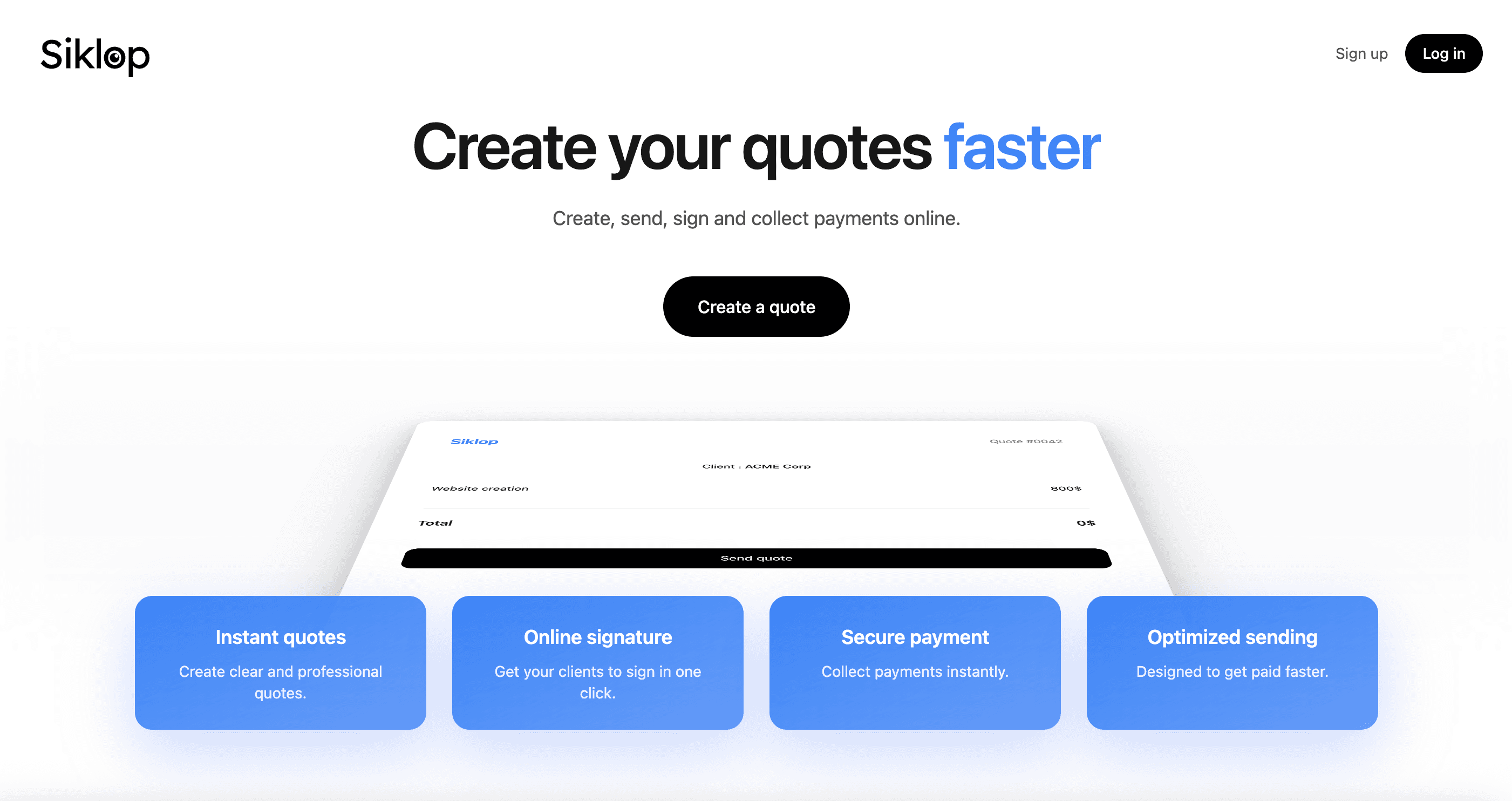
This is exactly the problem that Siklop was designed to solve. The goal is simple: allow any professional to create a quote, get it approved, collect a deposit or full payment, and track the entire process from a single platform.
Create quotes for free without an account
Unlike most quote software on the market, Siklop allows you to get started immediately without creating an account. Users can freely test the platform, create a professional quote, customize their document, and generate a PDF without providing an email address or purchasing a subscription.
This approach allows professionals to explore the platform at their own pace and determine whether it truly fits their needs before making any commitment. For many contractors, freelancers, and small businesses, this flexibility represents a significant advantage compared to software solutions that require registration from the very first step.
Get quotes approved online
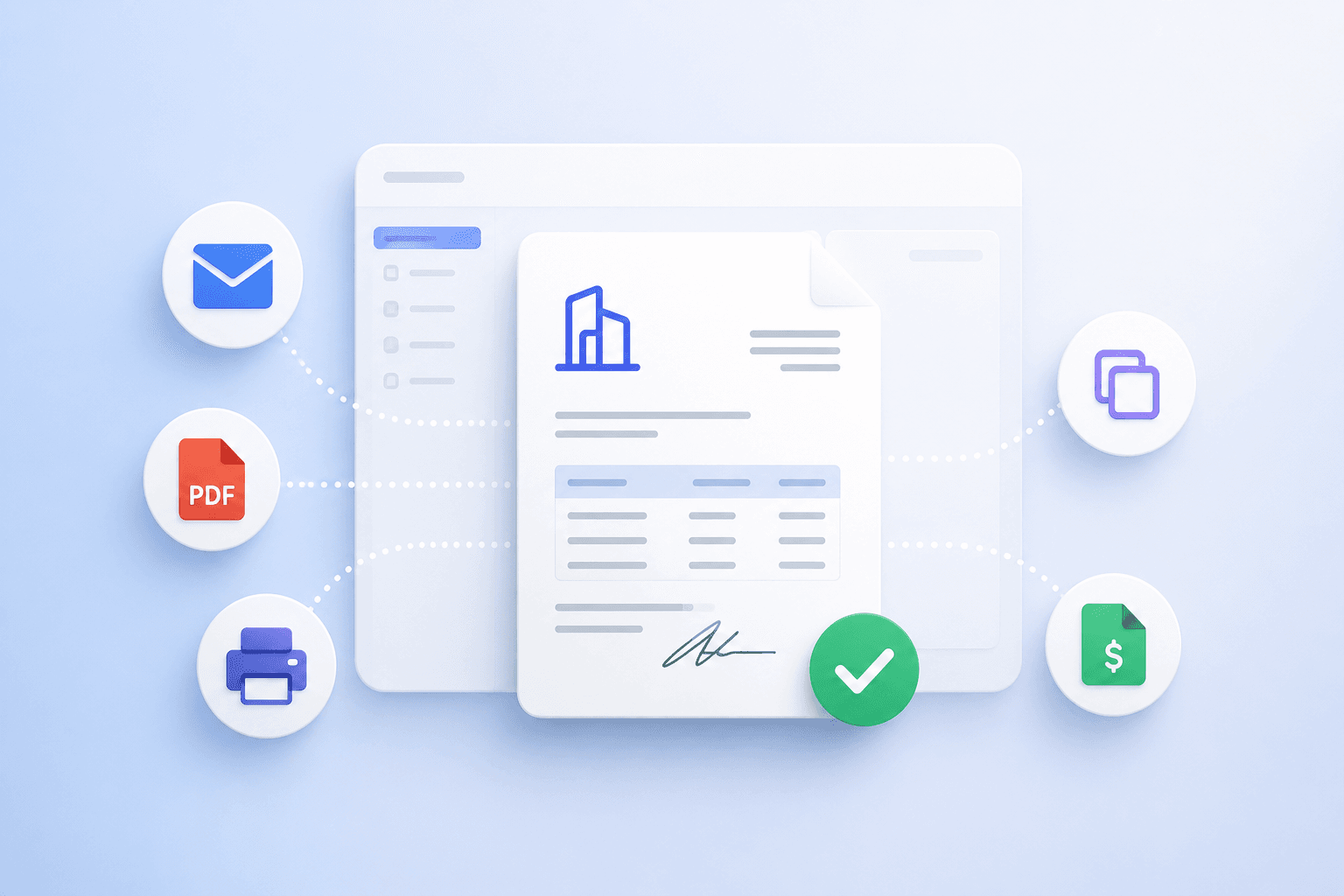
Once your quote is ready, Siklop generates a secure link that can be shared with your client by email, messaging apps, or any other communication channel.
When the client opens the link, they are taken to a fully branded page customized to reflect your business. They can view your visual identity, project details, quote breakdown, and all the information they need to make a confident decision.
This modern presentation creates a much more professional impression than sending a simple PDF attachment. Clients benefit from a smooth, clear, and reassuring experience that works seamlessly on desktops, tablets, and smartphones. For many contractors, freelancers, and small businesses, this makes it possible to deliver a level of professionalism typically associated with much larger organizations.
The e-signature process is then integrated naturally into the approval workflow. In just a few clicks, clients can approve your proposal without printing, signing, scanning, and emailing documents back and forth. This simplicity significantly reduces approval times, minimizes abandonment, and generally improves quote conversion rates.
Beyond the time savings, this approach also helps strengthen client trust. A modern, secure, and professional approval process provides reassurance and encourages action when prospects are most engaged with their project.
Collect deposits by credit card
After approving the quote, clients can immediately pay the requested deposit directly from the same page.
The payment module is naturally integrated into the approval process. There is no need to send banking details, wait for a bank transfer, or manage multiple administrative exchanges before receiving payment.
Modern payment methods are supported to match current customer expectations:
- Visa;
- Mastercard;
- Apple Pay;
- Google Pay;
- and major payment methods supported by Stripe.
Today, most consumers are accustomed to making purchases online. In many cases, their payment information is already stored on their phones or browsers. Payment becomes a natural continuation of quote approval, significantly reducing friction and encouraging much faster deposit collection.
Set your own deposit amount
Every business operates differently, and there is no universal deposit amount. Some professionals request 10%, others 30%, 50%, or even full payment before a project begins.
For this reason, Siklop allows you to freely configure the amount requested from your client before sending the quote. In just a few clicks, you can define the amount that best fits your business, your level of risk, and your preferred way of working.
The deposit can be configured either as a percentage of the quote or as a fixed amount, depending on your needs. This gives you complete control over your payment policy without requiring manual calculations or document modifications for every new project.
This flexibility makes it easy to adapt your payment terms to each client or project. Whether you want a small deposit to secure a project or a larger amount to cover upfront expenses, the setup remains simple and fast.
The goal is to let you work the way you prefer while maintaining a professional, modern process fully integrated into your quote workflow.
Centralize quote, approval, and payment tracking
One of Siklop's biggest advantages is the ability to centralize the entire customer journey.
From a single dashboard, professionals can track every important stage of the process:
- quote sent;
- quote viewed;
- quote approved;
- deposit paid;
- full payment completed;
- project confirmed.
This visibility makes it possible to instantly understand the status of every project without switching between multiple tools or performing manual checks.
The result is simple: less time spent on administration, fewer follow-ups, less uncertainty, and more time available to focus on your business and your clients.
Conclusion
Requesting a deposit on a quote is no longer reserved for large companies or complex projects. Today, it is one of the simplest and most effective ways to secure a project, protect cash flow, and reduce the risks associated with cancellations and unpaid invoices.
Whether you are a contractor, freelancer, consultant, or small business owner, a deposit provides a concrete commitment from the client before work begins. It also helps cover initial project expenses, improves scheduling, and creates a more secure working environment.
Although there is no universal amount, a deposit between 20% and 30% often provides an excellent balance between financial protection and client acceptance. In some situations, requesting a higher percentage—or even full payment upfront—may be entirely appropriate depending on your business model.
However, the amount itself is only part of the equation. The way a quote is presented, approved, and paid also plays a critical role. The simpler the process, the more likely clients are to move forward quickly. Conversely, every additional step creates another opportunity to delay the decision or postpone payment.
This is precisely why more professionals are turning to solutions that combine quote creation, e-signatures, and online payments within a single workflow. By reducing friction between quote approval and deposit collection, businesses can secure more projects, save time every day, and provide a significantly more modern customer experience.
If you're looking for a solution that allows you to create quotes for free, get client approvals online, and collect deposits or credit card payments from a single platform, you can try Siklop and discover how to simplify your entire sales process.
FAQ
Can a client refuse to pay a deposit?
Yes. A client is free to refuse the payment terms outlined in a quote. However, a professional is equally free to make the start of a project conditional upon the payment of a deposit. In many industries such as construction, remodeling, professional services, and consulting, requesting a deposit is now considered standard practice. When it is clearly stated on the quote, most clients understand the request because it helps secure the project, confirms their commitment, and covers part of the expenses incurred before work begins.
Is an approved quote valid without a deposit?
Yes. In most cases, an approved quote already represents a contractual commitment between the client and the professional, even if no deposit has been paid. However, an approved quote without a deposit provides less protection for the business. Until payment has been received, the professional assumes the full financial risk associated with the project. This is why many contractors, freelancers, consultants, and small businesses now combine quote approval with a deposit in order to better secure projects and reduce the risk of cancellations or non-payment.
Can you request a 50% deposit on a quote?
Yes. It is perfectly acceptable to request a 50% deposit when the nature of the project justifies it. This practice is common when significant expenses must be incurred before work begins, when specific materials need to be ordered, when resources must be reserved, or when the project involves highly customized work. The greater the financial risk before the project starts, the more appropriate a larger deposit may be. The key is ensuring that the amount requested is clearly stated on the quote and accepted by the client before work begins.
Can you require 100% payment upfront?
Yes. In certain industries, it is entirely reasonable to request full payment when the quote is approved. This approach is commonly used for certain professional services, one-time projects, low-cost jobs, consulting work, administrative services, and remote projects. It can also make sense when a professional wants to eliminate financial risk before beginning work. The most important factor is ensuring that the payment terms are clearly explained and accepted by the client before the project starts.
Do you need to issue an invoice for a deposit?
In many situations, yes. When a deposit is collected before the work has been fully completed, a deposit invoice may be required depending on your business structure, tax obligations, and local regulations. A deposit invoice provides formal documentation of the payment received, serves as proof of payment for the client, and simplifies project accounting. Because requirements vary depending on the situation, it is advisable to verify the rules that apply to your business and location.
When should you request a deposit: before or after quote approval?
In most situations, the deposit is requested after the quote has been approved. The process is simple: the client first approves the proposal and then pays the deposit to confirm the project. This approach helps secure both the client's commitment and the start of the project before the professional incurs significant expenses or reserves time in their schedule.
Traditionally, these two steps were handled separately. The client approved the quote and then received banking details in order to make a payment several days later.
With Siklop, quote approval and deposit payment can be combined into a single workflow. Once the quote has been reviewed, the client can approve it electronically and immediately pay either the deposit or the full project amount by credit card. This approach significantly reduces approval delays, minimizes forgotten payments, and allows projects to be secured much faster.
How can you collect a deposit online?
Online payments are now one of the most effective ways to collect deposits quickly. Instead of sending banking information and waiting for a bank transfer, professionals can allow clients to pay their deposit directly by credit card at the moment they approve the quote. This approach reduces payment delays, minimizes forgotten payments, and generally improves quote conversion rates.
With Siklop, online payment can be integrated directly into the quote approval process so clients can approve the quote electronically and immediately pay their deposit without leaving the page.
Is a deposit refundable?
Unlike some reservation fees or retainers, a deposit generally commits both parties to completing the agreement. In principle, once a deposit has been paid, the client agrees to proceed with the project and the professional agrees to perform the work described in the quote.
The consequences of cancellation depend on the specific circumstances, the terms included in the quote, and the regulations that apply to the project. In the event of a dispute or special situation, it is recommended to review the contractual terms outlined in the quote or seek advice from a qualified legal professional.
How should a deposit be shown on a quote?
A deposit should appear clearly on the quote to avoid any confusion. It is generally recommended to specify the percentage requested, the corresponding amount, and the payment terms. The client should immediately understand how much is due upon approval and when payment must be made.
A simple statement such as "30% deposit due upon approval, totaling $1,500" is usually sufficient to present the information clearly, professionally, and in line with best practices.
What deposit do contractors usually ask for?
In the construction industry, a 30% deposit is often considered the most common practice. Many contractors and construction companies use this percentage because it provides a good balance between securing the project and maintaining client acceptance. It helps cover part of the material costs, reserve time in the schedule, and confirm the client's commitment before work begins.
This practice is widely used by general contractors, electricians, plumbers, carpenters, roofers, painters, cabinet makers, tile installers, concrete contractors, and many other construction professionals. For most remodeling, construction, and improvement projects, a deposit between 20% and 30% is generally well accepted by clients.
For projects that require expensive materials, custom orders, or significant upfront expenses, it is also common to request a deposit of 40% to 50%. The ideal amount always depends on the nature of the project, the expenses incurred before work begins, and the level of financial risk assumed by the business.