Is a quote valid without a signature?

Is a quote valid without a signature? Can you start a project if your customer never signed the quote? Is a verbal agreement or an email exchange enough to make the quote legally binding? And what happens if the customer has already paid a deposit?
These are common questions among contractors, freelancers, and small business owners. To avoid delaying a project or losing a customer, some professionals begin work before receiving a signed quote. However, doing so can expose your business to significant risks if a dispute or unpaid invoice arises later.
In most situations, a signed quote offers the best protection for both you and your customer. It clearly documents the agreement between both parties and helps prevent disputes over pricing, the scope of work, deadlines, or payment terms.
In this guide, you'll learn whether a quote is valid without a signature, the exceptions that may apply, the risks of starting work without a signed quote, and the best practices for protecting your business before any work begins.
Quick answer
As a general rule, an unsigned quote is not legally binding on the customer. Until the customer has clearly accepted your offer, they can usually decide not to proceed without being required to pay for the proposed work. For contractors and businesses, starting a project without a signed quote significantly increases the risk of disputes and unpaid invoices.
There are, however, a few exceptions. A deposit payment, work that has already started with the customer's approval, or certain written communications may, depending on the circumstances, demonstrate that both parties agreed to proceed with the project. However, these situations are generally more difficult to prove than having a signed quote.
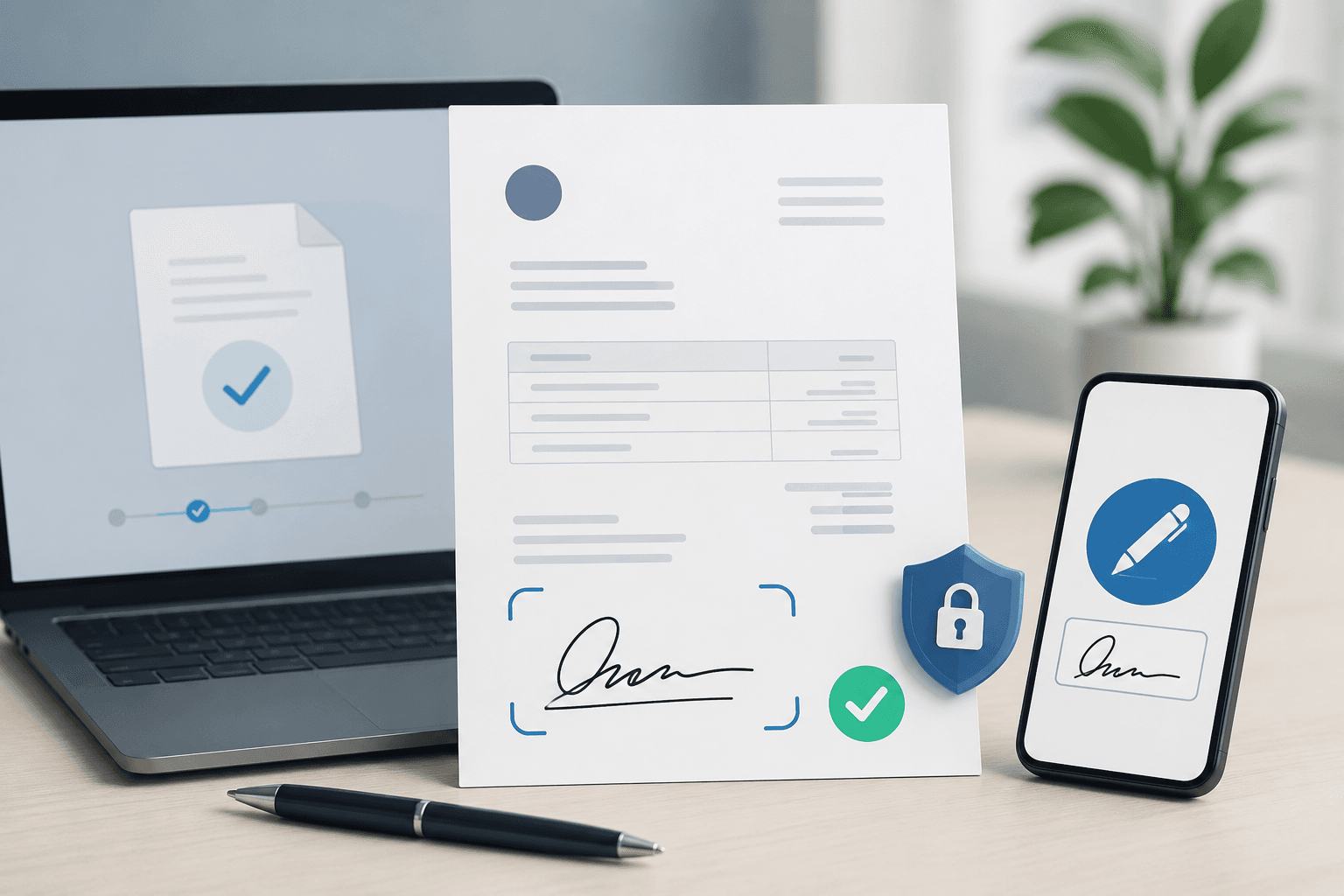
For this reason, it's always recommended to obtain your customer's signature before starting any work. An electronic signature provides the same legal value as a handwritten signature while making it much easier for customers to approve your quotes. To learn more, read our guide: How to add an electronic signature to a quote.
| Situation | Is the quote valid? |
|---|---|
| Signed quote | ✅ Yes |
| Electronically signed quote | ✅ Yes |
| Quote sent but not signed | ❌ Generally, no |
| Deposit has been paid | ⚠️ May indicate acceptance of the quote |
| Work has started with the customer's approval | ⚠️ May serve as evidence that the quote was accepted |
Why is a quote generally not valid without a signature?
A signature is what formally confirms the agreement between a business and its customer. Until the quote has been accepted, there is usually no clear evidence that both parties agreed on the scope of work, pricing, project timeline, or payment terms.
A quote is, above all, a business proposal. It outlines the work to be performed and the conditions under which it will be completed, but it generally becomes legally binding only once the customer clearly accepts the offer. In most cases, that acceptance is demonstrated by a handwritten or electronic signature.
Without a signature, a customer may later claim that they never accepted the quote, that they were only requesting pricing information, or that they were still comparing different contractors before making a decision. If a dispute arises, proving that your quote was actually accepted becomes much more difficult.
A signed quote also protects the customer. It allows them to review the scope of work, pricing, deadlines, and payment terms before the project begins, ensuring that both parties share the same expectations.
For this reason, contractors should avoid starting work before obtaining a signed quote whenever possible. Taking a few extra minutes to secure the customer's approval before work begins can help prevent disputes, payment issues, and costly misunderstandings later on.
Are there any exceptions?
Although an unsigned quote is generally not legally binding, there are situations where other evidence may demonstrate that both parties agreed to move forward with the project. These situations are assessed on a case-by-case basis and should never be considered a substitute for obtaining a signed quote.
A deposit has been paid
A deposit payment is often one of the strongest indicators that a customer has accepted your quote. By paying part of the agreed amount before work begins, the customer generally demonstrates their intention to proceed with the project under the terms outlined in the quote.
Even without a signature, a deposit can therefore become valuable evidence if a dispute arises. For this reason, it's good practice to issue a deposit invoice and keep proof of the payment.
To learn more, read our guide: How to ask for a deposit on a quote.
The work has already started
If work begins with the customer's knowledge and approval, this may also help demonstrate that they accepted your quote. Allowing you to start the project, giving you access to the job site, or actively following the progress of the work can all serve as evidence that an agreement existed.
However, proving acceptance in this way is much more difficult than relying on a signed quote. If a dispute arises over pricing, the scope of work, or project deadlines, each party may have a different version of what was agreed, making the situation far more complicated.
A written agreement may sometimes be enough
In some cases, emails, text messages, or other written communications may also demonstrate that the customer accepted your proposal. For example, if a customer replies, "I accept your quote, you can start the work," this may clearly show their intention to move forward even without signing the document.
That said, these forms of evidence are generally less reliable than a signed quote. They may be incomplete, open to interpretation, or fail to include all of the terms contained in the original quote. Whenever possible, the safest approach is to obtain a signature before starting any work.
What are the risks of starting work without a signed quote?
Starting a project without a signed quote may seem like a good way to save time, especially if the customer is eager to get started or you've already built a trusting relationship. However, this decision can quickly create problems if a disagreement arises during or after the project.
The biggest risk involves getting paid. Without a signed quote, a customer may dispute the invoice amount, claim they never approved certain work, or refuse to pay for part—or all—of the project. Even if the work has been completed, proving exactly what was agreed upon becomes much more difficult.
An unsigned quote can also lead to disagreements about the scope of work. A customer may believe that certain tasks were included in the original price, while you consider them additional work that should be billed separately. Without a written agreement, these misunderstandings are far more likely to turn into disputes.
Finally, starting work without a signed quote leaves you with less evidence if you need to recover an unpaid invoice or defend your position in a legal dispute. While other documents or communications may help demonstrate that an agreement existed, they are rarely as strong as a quote signed by your customer.
For these reasons, it's always best to wait until the quote has been approved before beginning any work. Making this a standard part of your workflow significantly reduces the risk of payment disputes and helps protect both your business and your customers.
How can you secure a customer's acceptance of a quote?
A few simple best practices can significantly reduce the risk of disputes and help ensure your quotes are properly accepted before any work begins. They protect both your business and your customer while making the entire project run more smoothly.
Always get the quote approved before starting work
As soon as your customer confirms they want to move forward, make it a habit to obtain their approval before scheduling the project, ordering materials, or committing time to the job. This ensures that both parties have formally agreed to the scope of work, pricing, and payment terms before any commitments are made.
It's also best not to rely solely on a verbal agreement or a simple "go ahead" over the phone. Always request a formal approval so there is clear evidence that your customer accepted the quote before work begins.
By making quote approval a standard part of every project, it becomes a natural step in your sales process rather than something you have to chase at the last minute.
Use an electronic signature
When meeting your customer in person isn't practical, an electronic signature is an excellent alternative. It allows customers to approve a quote in just a few clicks from their computer, tablet, or smartphone while providing a reliable record of their acceptance.
Electronic signatures also speed up the approval process, reducing the chances of work starting before the quote has been formally accepted. To learn more, read our guide: How to add an electronic signature to a quote.
Request a deposit
Requesting a deposit provides additional protection for your business. It confirms the customer's commitment to the project while reducing the likelihood that they'll cancel after you've already started planning or purchasing materials.
A deposit also helps cover your initial expenses and improves your cash flow before work begins. To learn more, read our guide: How to ask for a deposit on a quote.
Keep records of every communication
Even if your quote has been signed, it's good practice to keep a record of all communications with your customer. Emails, text messages, meeting confirmations, proof of deposit payments, and any approved changes to the project can all become valuable evidence if a dispute arises later.
Keeping all of these documents in one estimating and invoicing system makes them easy to find whenever you need them and helps you respond quickly if any questions or disagreements occur.
Simplify quote approvals with Siklop
Getting a quote approved should never delay the start of a project. With Siklop, you can create professional quotes, send them to your customers in just a few clicks, collect electronic signatures remotely, and track their status in real time—all from a single platform.
As soon as your customer approves the quote, you'll be notified instantly so you can confidently schedule the work. If required, you can also request a deposit during the approval process using the integrated online payment feature, helping you secure the project before work even begins.
By bringing together quote creation, electronic signatures, online payments, and document tracking in one place, Siklop helps you save time, reduce the risk of disputes, and streamline your entire sales process.
👉 Try our free quote generator and simplify the creation, approval, and management of all your quotes from one platform.
Conclusion
An unsigned quote rarely provides the same level of protection as one that has been formally approved by your customer. While there are situations where other evidence may demonstrate that an agreement existed, these cases are generally more difficult to prove and can lead to disputes that could easily have been avoided.
The safest approach is to make quote approval a standard part of your workflow. Obtaining a clear acceptance before work begins protects your business, reassures your customers, and establishes a solid foundation for the rest of the project.
Simple habits—such as using electronic signatures, requesting a deposit, and keeping a complete record of your communications—can significantly reduce risk while helping you manage your quotes in a more professional and efficient way.
FAQ
Is a quote signed by only one party legally valid?
In most cases, a quote signed only by the customer is enough to demonstrate their acceptance of your offer. By signing the document, the customer confirms that they agree with the proposed work, pricing, and payment terms. Once accepted, your business is also expected to fulfill the commitments outlined in the quote.
On the other hand, if only the contractor has signed the quote and the customer has never accepted it, the document generally remains a business proposal. Until the customer clearly accepts the offer—whether by signing it or through another recognized form of acceptance—they are usually free to decide not to proceed.
To avoid disputes, it's good practice for both parties to keep a copy of the signed quote for their records.
Does an electronically signed quote have the same legal value as a paper-signed quote?
Yes. In most jurisdictions, an electronic signature has the same legal effect as a handwritten signature, provided it complies with the applicable legal requirements and can reliably identify the signer while preserving the integrity of the document.
Electronic signatures also make the approval process much easier. Customers can accept your quote in just a few clicks from their computer, tablet, or smartphone without printing, signing, or scanning any documents. This helps speed up approvals and reduces delays before work can begin.
For contractors and businesses, electronic signatures also provide a record of the customer's approval, including a complete signature history. They have become a simple, secure, and widely accepted way to get quotes approved remotely.
Can a quote be accepted verbally?
Yes, in some situations, a quote can be accepted verbally. However, relying on a verbal agreement is strongly discouraged because it can be much more difficult to prove if a dispute arises later. If the customer later denies accepting the quote or disputes the agreed price, you may have to demonstrate that an agreement was actually reached.
In practice, a verbal agreement may be supported by other evidence, such as emails, text messages, a deposit payment, or the fact that the work began with the customer's approval. However, this type of evidence is generally less reliable than a signed quote.
To avoid disputes, it's always best to obtain written approval—ideally through a signed quote—before starting any work.
Who should keep a copy of the signed quote?
Both the contractor and the customer should keep a copy of the signed quote. It serves as evidence of the agreement between both parties and can be invaluable if questions, project changes, or disputes arise later.
For the contractor, a signed quote helps demonstrate the agreed scope of work, pricing, project timeline, and payment terms. For the customer, it provides a clear record of the services that were approved and the commitments made by the business.
Keeping signed quotes in a digital format is generally the most practical solution, making them easy to retrieve whenever needed. Estimating and invoicing software can automatically store and organize signed quotes, allowing you to access them quickly even months or years after the project has been completed.
What should you do if a customer claims they never signed the quote?
If a customer claims they never signed your quote, start by gathering every piece of evidence you have. Depending on how the quote was approved, this may include the signed quote itself, email conversations, text messages, proof of a deposit payment, or the audit trail provided by your electronic signature solution.
Next, try to resolve the issue through open communication. In some cases, the dispute may simply be the result of a misunderstanding, an incorrect version of the quote, or confusion about its contents.
If you cannot reach an agreement and the dispute continues, all of this documentation can help demonstrate that the customer accepted your offer. The more evidence you can provide, the easier it will be to support your position if legal action becomes necessary.