Contractor: How to avoid unpaid invoices? 10 effective solutions

Late or unpaid invoices are one of the biggest challenges contractors face. Whether you work with homeowners or businesses, a client who delays payment or refuses to pay can quickly affect your cash flow, delay future projects, and reduce your company's profitability.
Fortunately, there are several proven ways to significantly reduce this risk. A detailed estimate, a deposit before work begins, electronic signatures, clear payment terms, and online payments are all best practices that help secure your projects before the first day of work.
In this guide, you'll discover the 10 most effective ways for contractors to avoid unpaid invoices, protect your cash flow, and improve your chances of getting paid on time.
Quick answer
Yes. While no contractor can completely eliminate the risk of unpaid invoices, there are several practical steps you can take to dramatically reduce it before work even begins.
The most effective strategies include getting every estimate approved, requesting a deposit, setting clear payment terms, using electronic signatures, offering online payments, and following up immediately when a payment becomes overdue. Together, these best practices help protect your cash flow while building trust with your customers.
| Solution | Effectiveness |
|---|---|
| Get every estimate approved | ⭐⭐⭐⭐⭐ |
| Request a deposit before starting work | ⭐⭐⭐⭐⭐ |
| Use electronic signatures | ⭐⭐⭐⭐☆ |
| Define clear payment terms | ⭐⭐⭐⭐☆ |
| Offer online payments | ⭐⭐⭐⭐⭐ |
| Send invoices promptly | ⭐⭐⭐⭐☆ |
| Follow up immediately on overdue invoices | ⭐⭐⭐⭐⭐ |
| Keep complete documentation | ⭐⭐⭐⭐☆ |
| Track estimates and invoices | ⭐⭐⭐⭐☆ |
| Use estimating and invoicing software | ⭐⭐⭐⭐⭐ |
Why are contractors particularly affected by unpaid invoices?
Unpaid invoices can affect any business, but contractors are especially vulnerable. Unlike many service-based businesses, contractors often have to spend a significant amount of money before receiving any payment from their customers.
For many projects, contractors must purchase materials, schedule employees or subcontractors, rent equipment, and reserve time on their calendar before work even begins. If a customer delays payment or refuses to pay after the project is completed, the contractor is left covering all of these expenses, which can quickly put pressure on cash flow.
Construction and home improvement projects also tend to last several days, weeks, or even months. During that time, expenses continue to grow while the final payment is often received only after the work is completed. A single unpaid invoice can easily cost thousands of dollars and have a serious impact on a small business.
Many contractors also work directly with homeowners. While most customers pay on time, some may experience financial difficulties, dispute part of the work performed, or simply delay payment intentionally or unintentionally.
That's why it's essential to put the right systems in place to secure your payments before starting any project. The best practices covered in this guide can significantly reduce the risk of unpaid invoices while providing a more professional experience for your customers.
Solution #1: Always get your estimate approved
Your estimate is your first line of defense against unpaid invoices. Before starting any project, it clearly documents the agreement between you and your customer by outlining the scope of work, materials, quantities, pricing, project timeline, and payment terms.
Without an approved estimate, it becomes much more difficult to prove what both parties originally agreed to if a dispute arises. A customer may claim that certain work wasn't included, question the agreed price, or refuse to pay for additional services because there is no written record.
An approved estimate helps protect both you and your customer from the very beginning of the project. It confirms that your customer has accepted your proposal and agreed to the work, pricing, and payment conditions. While it cannot completely eliminate the risk of non-payment, it provides valuable evidence if a disagreement occurs.
For maximum protection, your estimate should be detailed, accurate, and easy to understand. The more clearly you describe the work to be performed, the less room there is for misunderstandings once the project is complete.
To learn how to create a professional estimate, read our guide: How to create a professional estimate.
👉 Try our free quote generator for contractors and create professional estimates in just a few minutes.
Solution #2: Request a deposit before starting the project
Requesting a deposit is one of the most effective ways to reduce the risk of unpaid invoices. By asking your customer to pay part of the total amount before work begins, you confirm their commitment while protecting your cash flow.
This practice is especially important for projects that require purchasing materials, scheduling labor, or reserving equipment before work starts. If a customer cancels the project at the last minute or delays paying the remaining balance, the deposit helps reduce your financial exposure and prevents you from covering all upfront costs yourself.
Beyond the financial aspect, requesting a deposit also helps you qualify your customers. A customer who is willing to pay a deposit is generally more committed to moving forward with the project, reducing the risk of cancellations or payment disputes later on.
The right deposit amount depends on your trade, material costs, and the size of the project. There is no universal percentage that fits every situation, but the amount and payment terms should always be clearly stated in your estimate.
To learn more, read our guides: How to ask for a deposit on an estimate and What percentage deposit should you request?.
Solution #3: Use electronic signatures
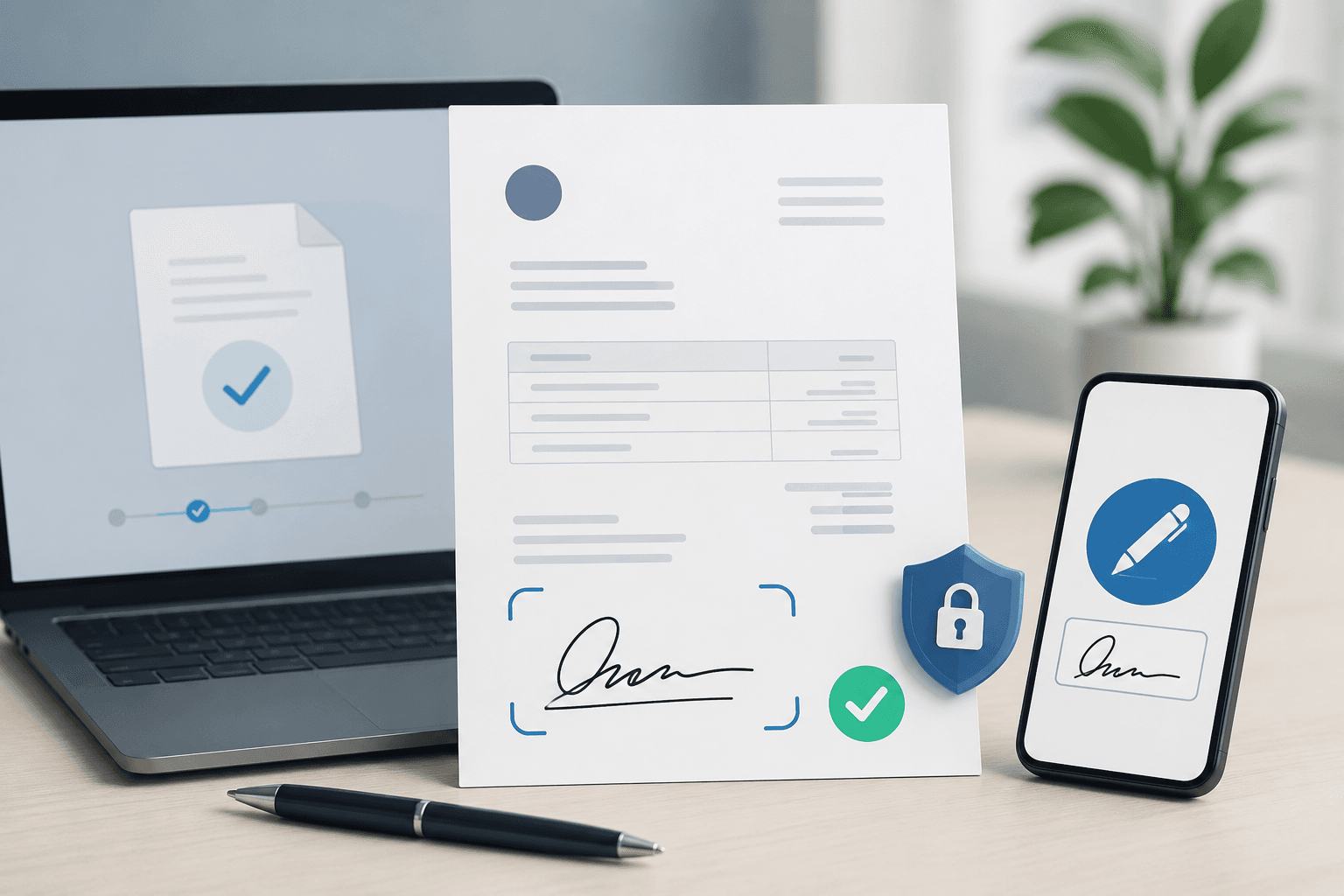
Electronic signatures are an excellent way to secure your estimates while making the approval process faster and more convenient. Instead of printing, signing, scanning, and emailing documents back, your customers can approve an estimate from their computer, tablet, or smartphone in just a few clicks.
Beyond convenience, electronic signatures provide additional proof that the customer accepted your estimate. Depending on the platform you use, you may also keep records such as the date and time of approval, the signer's identity, and a complete audit trail. These details can be extremely valuable if a dispute arises later.
Electronic signatures also help speed up project approvals. The easier it is for customers to approve an estimate, the more likely they are to move forward quickly instead of delaying the decision or choosing another contractor.
The best estimating platforms integrate electronic signatures directly into the estimate approval process, allowing you to create, send, approve, and track estimates from a single platform while providing a more professional experience for your customers.
To learn more, read our guide: How to add an electronic signature to an estimate.
Solution #4: Set clear payment terms
Many unpaid invoices are the result of unclear or poorly explained payment terms. To avoid misunderstandings, your estimate should clearly outline how and when payment is expected before any work begins.
Be sure to specify the required deposit, payment due dates, accepted payment methods, and any late payment fees or interest that may apply. The clearer these terms are from the beginning, the less room there is for disputes once the project is completed.
For larger projects that last several weeks or months, consider using a payment schedule with progress payments instead of waiting until the end of the job to receive the full amount. Collecting payments at key project milestones helps protect your cash flow while reducing your financial risk.
Finally, take the time to review your payment terms with your customer before work starts. Clear communication builds trust, prevents misunderstandings, and makes it much more likely that you'll be paid on time.
Solution #5: Offer online payments
Offering online payments is one of the most effective ways to reduce unpaid invoices. By allowing customers to pay their deposit or invoice online with a credit or debit card, you eliminate many of the steps that often delay payment or lead to forgotten invoices.
Instead of asking customers to mail a check or initiate a bank transfer, they can pay in just a few clicks as soon as they approve your estimate or receive their invoice. The easier the payment process is, the more likely you are to get paid on time.
Online payments also provide a better customer experience. Customers no longer need to search for your banking details, write a check, or log into their online banking account. A simple and convenient payment process naturally reduces delays and forgotten payments.
The best estimating and invoicing platforms even allow customers to pay immediately after electronically approving the estimate. This means they can approve your proposal and pay the required deposit—or even the full project amount—in a single workflow, helping you secure the project while improving your cash flow.
To learn how to implement this process, read our guide: How to send estimates and collect payments online.
Solution #6: Send invoices promptly
The longer you wait to send an invoice, the greater the risk of delayed payment. As soon as a project is completed, it's a good idea to send your invoice immediately while the work is still fresh in your customer's mind.
Waiting several days—or even weeks—to invoice a customer can lead to unnecessary delays, forgotten payments, or disputes. On the other hand, sending an invoice promptly reminds the customer that the work has just been completed and encourages faster payment.
Prompt invoicing also improves your cash flow. The sooner you send the invoice, the sooner the payment terms begin, reducing the amount of time you have to finance your business with your own money.
If you use estimating and invoicing software, you can save even more time by converting an approved estimate directly into an invoice without re-entering your customer's information or project details. This reduces manual work, minimizes errors, and helps you get paid faster.
To learn how, read our tutorial: How to convert a quote into an invoice.
Solution #7: Follow up as soon as a payment becomes overdue
One of the biggest mistakes contractors make is waiting too long before following up on an overdue invoice. The longer you wait, the less likely you are to receive payment quickly, and the more difficult the situation can become.
As soon as an invoice passes its due date, contact your customer. In many cases, late payments are simply the result of an oversight, a vacation, or an administrative delay. A polite reminder is often all that's needed to resolve the issue.
If payment is still not received, continue following up at reasonable intervals and keep a record of all communications, including emails, text messages, and letters. This documentation may prove valuable if the dispute escalates or legal action becomes necessary.
Modern estimating and invoicing software can automate payment reminders for you. Automatic reminders are sent based on the schedule you choose, helping you save time while ensuring that no overdue invoice is forgotten.
Solution #8: Keep thorough records
If a payment dispute arises, the documents you've kept can make all the difference. The more evidence you have of your agreement with the customer, the easier it will be to protect your business and support your position if a disagreement occurs.
Keep copies of every approved estimate, change order, invoice, payment confirmation, email, text message, and any other document related to the project. Photos taken before, during, and after the work can also provide valuable evidence that the agreed work was completed properly.
If you use electronic signatures, be sure to retain the approval records generated by your software, including the date and time of approval, the customer's identity, and the audit trail. These records can provide strong evidence if a dispute arises later.
Keeping all of these documents in one place not only makes them easier to find, but also saves valuable time if you ever need to respond to a payment dispute or begin the collections process.
Solution #9: Track your estimates and invoices
Keeping track of your estimates and invoices is essential for identifying potential payment issues before they become serious problems. Without the right tools, it's easy to overlook an estimate waiting for approval, an overdue invoice, or a customer who hasn't responded.
By monitoring the status of every document, you'll always know where each project stands. You can quickly identify pending estimates, approved estimates, invoices that have been sent, payments that have been received, and overdue invoices. This visibility allows you to act early before a late payment turns into a bad debt.
Regular tracking also improves your relationship with customers. You can follow up at the right time, answer questions quickly, and identify potential payment issues before they affect your cash flow.
Modern estimating and invoicing software makes this process much easier by centralizing all your estimates, invoices, approvals, payments, and reminders in one place. This gives you complete visibility over your business while reducing the time spent on administrative work.
Solution #10: Use estimating and invoicing software
Managing estimates, invoices, approvals, payments, and reminders across multiple tools increases the risk of mistakes and wastes valuable time. By using estimating and invoicing software, you can manage your entire sales process from one central platform.
From a single dashboard, you can create professional estimates, collect electronic approvals, request deposits, accept online payments, convert estimates into invoices, track payments, and automatically remind customers when invoices become overdue. Together, these features help reduce the risk of unpaid invoices while making your day-to-day business much easier to manage.
Beyond saving time, having everything in one place gives you complete visibility over your business. You can instantly see which estimates are waiting for approval, which invoices remain unpaid, and which customers require a follow-up. This allows you to act quickly before a late payment becomes a serious cash flow problem.
By automating many administrative tasks, estimating and invoicing software lets you spend less time on paperwork and more time growing your business while improving the payment experience for your customers.
👉 Try our free quote generator for contractors and manage your estimates, invoices, electronic approvals, online payments, and automatic reminders from one platform.
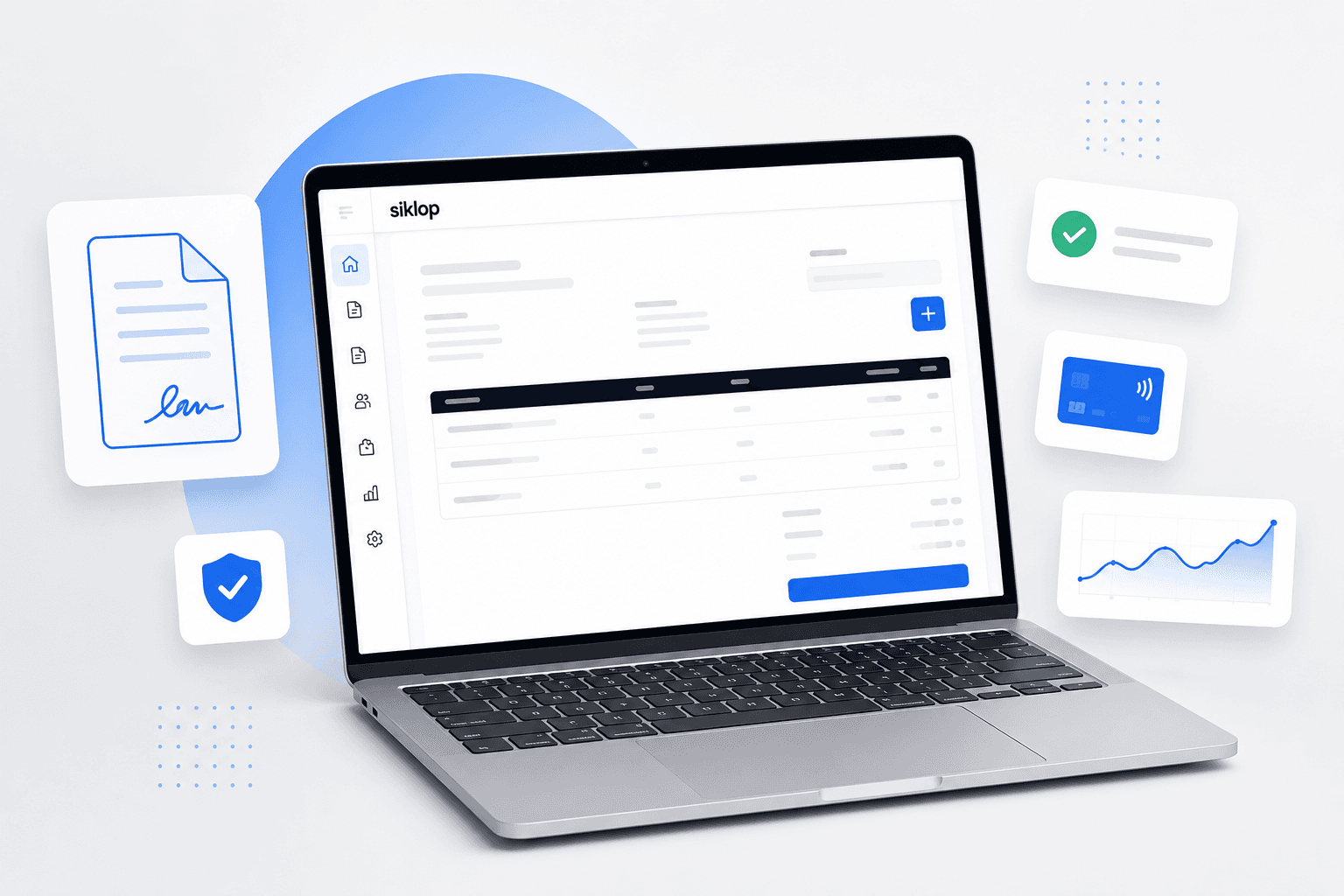
Simplify your payment process with Siklop
Avoiding unpaid invoices isn't about relying on a single solution—it's about applying the right best practices throughout your entire sales process. Siklop brings all of these tools together in one platform, helping you manage every step from creating an estimate to receiving payment.
Create professional estimates in minutes, collect electronic approvals, request deposits before work begins, accept online payments by credit or debit card, and convert approved estimates into invoices in just a few clicks. You can then track the status of every document in real time and automatically remind customers about outstanding invoices.
By centralizing your estimates, invoices, approvals, payments, and reminders in one place, you reduce errors, save valuable time, and increase your chances of getting paid on time. That means less administrative work and more time focused on delivering great projects and growing your business.
👉 Try our free quote generator for contractors and discover how Siklop can help you reduce unpaid invoices while simplifying your business.
Conclusion
Unpaid invoices are an unfortunate reality for many contractors. While it's impossible to eliminate the risk entirely, you can significantly reduce both the frequency and the financial impact by putting the right processes in place before work even begins.
A detailed estimate, electronic approvals, customer deposits, clear payment terms, online payments, prompt follow-ups, and careful tracking of estimates and invoices all play an important role in protecting your cash flow and reducing the likelihood of payment disputes.
Finally, using estimating and invoicing software that brings all of these features together allows you to save time, present a more professional image, and improve your chances of getting paid on time. By following these best practices, you'll protect your business while providing a smoother and more professional experience for your customers.
FAQ
How can I recover an unpaid invoice?
If a customer fails to pay an invoice by the due date, it's important to act quickly. Start with a friendly payment reminder, as many late payments are simply the result of an oversight or an administrative delay. If you don't receive a response, send one or more written reminders before taking further action.
If payment is still not received, several options are available depending on the amount owed and the circumstances. These may include negotiating directly with the customer, working with a collection agency, using mediation, or pursuing legal action. The sooner you begin the collection process, the greater your chances of recovering the outstanding balance.
What should I do if a customer refuses to pay after the work is completed?
If a customer refuses to pay after a project has been completed, the first step is to understand why. The issue may be related to a misunderstanding, a disagreement about the work performed, or dissatisfaction with part of the project. In many cases, an open discussion can resolve the problem without further action.
If you cannot reach an agreement, gather all supporting documentation, including the approved estimate, invoices, emails, text messages, project photos, change orders, and any proof that the work was completed. These records may be essential if you need to begin the collections process or take legal action.
When should I send a formal demand for payment?
A formal demand for payment should usually be sent after several payment reminders have gone unanswered. It's generally best to attempt an amicable resolution first before escalating the matter.
A demand letter formally requests payment within a specified period and explains the amount owed, the payment deadline, and the possible consequences of continued non-payment. In many situations, receiving a formal demand is enough to encourage the customer to pay before legal action becomes necessary.
How can I identify customers who may become payment risks?
While it's impossible to predict with certainty whether a customer will fail to pay, certain warning signs should not be ignored. Customers who refuse to approve an estimate, hesitate to pay a deposit, repeatedly ask for extended payment terms, or frequently change the agreed scope of work may present a higher payment risk.
Before accepting a large project, verify your customer's information whenever possible, clearly explain your payment terms, and document every agreement in a detailed estimate. These simple precautions can significantly reduce the likelihood of future payment disputes.
Should I accept Net 30 payment terms?
Net 30 payment terms are common when working with commercial clients and businesses, but they are not always the best option for contractors. If your projects require significant upfront spending on labor, materials, or equipment, waiting 30 days to receive payment can put unnecessary pressure on your cash flow.
Before agreeing to Net 30 terms, make sure they are clearly stated in your estimate or invoice and consider requesting a deposit before work begins. Combining a customer deposit with clearly defined payment terms helps protect your business while still offering flexible payment options to commercial clients.